
Michigan Warrant Checks
A Michigan warrant search has to follow the record's jurisdiction. There is no public statewide name-searchable active-warrant database. LEIN serves authorized users only, while MiCOURT, eTix, local lists, and court records each cover different material. A hit can point you to the right case or court. Only the issuing court confirms whether the warrant is still active and what it takes to resolve it.
- Gather the case or ticket number, the court or city named on the paperwork, and the name and date of birth used in the case.
- Use MiCOURT to look for a docket at a participating court. Treat the result as a lead, not a warrant-status confirmation.
- For an eligible payable citation, use eTix only to locate the ticket or payment path at a participating court. A ticket result does not show whether a warrant exists.
- Check the relevant county sheriff’s official warrant page if it publishes one. Local lists differ and may not include every court or warrant type.
- For a city or municipal-court matter, contact the court named on the citation. Do not assume a county list or another court’s portal includes it.
- Call the issuing court to ask whether the warrant is active, whether interim bond is listed, and what appearance or recall procedure applies.
- If a warrant is confirmed, ask the court or an attorney about the next step. After a recall, confirm whether the required agency and LEIN updates were completed.
An empty online search settles nothing. Contact the court anyway. Michigan's public products never combine every county, municipal, juvenile, federal, sealed, or nonparticipating-court record into a single lookup.
Michigan Court Tiers Route Warrant Records
Where you look depends on which court issued the warrant and whether the case later moved up a level. District courts handle most misdemeanor and traffic matters, arraignments, and felony preliminary examinations. After bindover, a felony can proceed to circuit court. Circuit and probate courts carry case duties of their own. Four limited municipal courts remain in Michigan, and all of them sit in Wayne County. A case number or court name printed on a citation will get you further than a person's current address.
| Court level | Common warrant context | Record route |
|---|---|---|
| District | Misdemeanor, traffic, arraignment, and felony preliminary matters. | District court clerk or warrant contact named by the court. |
| Circuit | Felony matters after bindover and family division cases. | Circuit court record; county clerk commonly serves as circuit clerk. |
| Probate | Probate and specified family or juvenile proceedings. | Probate court or register, subject to record restrictions. |
| Municipal | Local matters in the four remaining municipal courts. | The municipal court named on the notice. |
To find the right clerk, the State Court Administrative Office publishes the Michigan Trial Court Directory. Its January 2024 trial-court judgeship table counts 57 circuit, 103 district, 78 probate, and 4 municipal courts. Those are court units, not warrant counts and not one court per county.
Michigan's Statewide Warrant System
Michigan's Law Enforcement Information Network, known as LEIN, is a statewide criminal-justice information network run by the Michigan State Police Criminal Justice Information Center. It supports authorized agency work and carries wanted-person information. The public cannot search it. A companion tool, eWarrant, is an electronic interagency workflow still in phased deployment, and it offers no public result page either. So the statewide layer never replaces the issuing court. A county sheriff or local police agency may handle service, while the court itself controls the case, the bond, and any recall. That split is the heart of Michigan warrant records. For a deeper explanation of LEIN, eWarrant, and the reporting limits, see the Michigan Warrant Database page.
Michigan Warrant Systems Have Different Jobs
Several Michigan search tools are easy to confuse because they all surface justice-related information. Their jobs differ. None builds a public statewide warrant roster.
| Channel | Useful for | Does not establish |
|---|---|---|
| LEIN | Restricted wanted-person information for authorized users. | A public self-search or complete public county map. |
| MiCOURT | A docket lead for participating courts and cases. | Active warrant status across all courts. |
| ICHAT | Eligible public criminal-history information in MSP’s repository. | Warrant status; MSP expressly excludes warrant information. |
| eTix | Payable-ticket search and payment at participating courts. | A warrant check or all-court traffic coverage. |
MSP states plainly that LEIN access is restricted and that ICHAT does not provide warrant information. MiCOURT Case Search warns that court coverage and case types vary. eTix handles payable tickets for participating courts, nothing more.
Warrants in Michigan: The Main Types
Michigan's court rules separate the reason a warrant issues from the power it hands an officer. Miss a court date and a bench warrant may follow. File a criminal complaint and the result can be an arrest warrant or a summons. Traffic and family cases run on their own procedures. "Capias" is not a safe statewide label for every unpaid fine or ticket, so rely on the term the actual court record uses.
| Warrant Type | How It Arises | Who Issues It |
|---|---|---|
| Arrest warrant | Issued after a complaint and judicial probable-cause decision. | Judge or magistrate in the case. |
| Bench warrant | May follow a missed appearance, noncompliance, or contempt process. | The court handling the pending matter. |
| Traffic FTA process | May involve show cause, a separate warrant, or a statutory license consequence. | Issuing district or municipal court. |
| Search warrant | Authorizes a search or seizure; it is not an arrest warrant. | Judge or magistrate under the applicable rule. |
| Fugitive process | May involve another state or federal jurisdiction and extradition rules. | Originating court and authorized enforcement agency. |
Michigan Warrant Reporting Has Limits
Michigan Public Act 319 sets out reporting duties for certain wanted-person information and updates. Its provisions exclude misdemeanor traffic matters along with city, village, and township ordinance violations. That exception is a concrete reason to stop describing LEIN as a universal list of every court warrant. The same framework produces aggregate crime statistics, not a public count of outstanding warrants. Michigan law also assigns different tools to different steps. MCL 764.1a covers the complaint and probable-cause basis for warrant process. MCR 6.103 governs criminal failure-to-appear warrants and their exceptions. MCL 257.321a addresses specified license-suspension consequences. Not one of them builds a public statewide warrant portal.
Key rules:
Public Act 319 covers specified reporting and expressly excludes misdemeanor traffic and municipal-ordinance matters from those sections.
MCL 764.1a ties warrant process to a complaint and judicial probable-cause finding.
MCR 6.103 sets a criminal FTA process with timing rules and exceptions.
Michigan Warrant Records: What They Show
Michigan has no statewide public warrant form and no uniform result layout. A court record and a local sheriff list may show different fields. Case number and warrant number are not always the same thing. A date can mark issuance, listing, or another event entirely. Ask the court what each field means before reading it as current status.
| Warrant or case number | Local number format Court-specific identifier; no universal Michigan warrant-number format was found. |
|---|---|
| Name and identifiers | May help match a record, but a name alone does not prove identity. |
| Charge or reason | Shows the allegation or court event tied to the order; it is not a conviction. |
| Issuing court | Names the judge, court, and jurisdiction that control the case action. |
| Bond | May show an interim amount or local field; confirm type and conditions with the court. |
| Status and dates | May be stale or use local labels. Ask whether the order is active, served, recalled, or superseded. |
A county sheriff page might list name, age, date, bond, and charge, while a court list shows status, date of birth, case number, and agency number. Those are local formats, not a required statewide display. A blank field does not prove a sealed or nonpublic record is absent.
Michigan eWarrant Is a Phased Workflow
Michigan's eWarrant project moves warrant work between courts and agencies electronically, though rollout differs by county and vendor. Board minutes from MSP CJIS in 2025 and 2026 describe testing, implementation, and configuration work. That is planning detail, not a map. It also does not show every older local file backfilled into one system. The workflow runs court action first. Then come local service handling, authorized reporting to LEIN where that applies, and a separate update if a court recalls the order. After recall, MC 220 records the court-to-agency step. The public side is bare. Michigan provides no eWarrant search fields, account, or results list. For one case, use the issuing court. The court's current record controls the warrant's status, and reporting and recall updates run as separate steps.
Warrant Record Access Under Michigan Law
Michigan's FOIA covers executive-branch public bodies, not the courts. You can still request a warrant record held by MSP or another covered agency. Law-enforcement exemptions may limit disclosure. A request is no instant confirmation. Court files follow a different route. MCR 8.119 and local access procedures govern them, with public inspection allowed unless a statute, rule, or court order restricts the record. Juvenile court material carries separate limits under MCL 712A.28. Search-warrant affidavits stay suppressed for 56 days under MCL 780.651 unless the court orders a longer period. That rule targets affidavit papers. It is no blanket bar on every arrest warrant in Michigan, and access can shift again when a felony binds over to circuit court.
Access routes:
Michigan FOIA, MCL 15.231 et seq. applies to covered public agencies; the judiciary is excluded.
MCR 8.119 governs trial-court records and allows restrictions required by statute, rule, or order.
MCL 712A.28 limits public access to juvenile case information, subject to statutory exceptions.
Michigan Traffic Warrants and License Holds
Michigan splits traffic matters three ways: criminal cases, civil infractions, and local ordinance violations. Miss a date, and the outcome depends on the court and the case. It could be a show-cause process, a default judgment, a separate warrant, or a license consequence. Under MCL 257.321a, listed failures can affect driving privileges. A suspension is not an arrest warrant. Not every unpaid ticket triggers either one. For payable tickets, eTix serves participating district courts. MiCOURT can offer a docket lead where a Michigan court takes part. Ask the issuing court directly to learn whether a warrant exists. Once resolved, confirm the court updated its report. Then check driver status with the Secretary of State separately. The MCL 257.321a statute and the Michigan SOS Clean Slate to Drive FAQ explain the license and restoration process, and the Michigan Traffic Warrants page details the court steps.
Michigan Recall and LEIN Removal Differ
A recall is two jobs, not one. The court acts first. Then law enforcement must update its systems. SCAO's MC 220 form records the order, the agency contact, and a certificate of removal from LEIN. That paperwork shows why assumptions are risky. Databases do not all change at once. Michigan sets no public statewide update clock. Ask the issuing clerk what the docket shows and whether any serving agency still needs notice. Keep the court's written confirmation when you have it. For an agency record, a Michigan FOIA request may seek releasable material, but only the court decides the warrant's judicial status. The official MC 220 recall and LEIN removal form documents this court-to-agency workflow.
Michigan Warrant Status Terms Need Context
Michigan publishes no statewide glossary of warrant status codes. A local list may show a bare label. You will not know whether it tracks the court docket, the service history, or a later system update. Ask the clerk to name the current order and what action remains rather than treating one status word as a statewide legal definition.
- Active
- A local or system status indicating action may remain; confirm with the issuing court.
- Recalled
- The issuing court has withdrawn the warrant; agency notification may still need checking.
- Served
- An officer executed the order; the underlying case can continue.
- FTA
- Failure to appear for a required court event. The result depends on the case and rule.
- Interim bail
- A release amount or condition set before arraignment when authorized by the court.
Federal Warrants Use a Separate Michigan Route
Federal warrants belong to the federal court named on the case, not the county docket. Michigan sits in two districts. The Eastern and Western U.S. District Courts split the state. The U.S. Marshals Service coordinates federal fugitive work with state and local partners. PACER opens public federal dockets and documents. It is not a warrant-search tool. Sealed matters may not appear there either. The PACER pricing page explains charges for docket access, not warrant status. Use the district court named in the paperwork or seek counsel; a federal order and a Michigan county warrant each need separate confirmation.
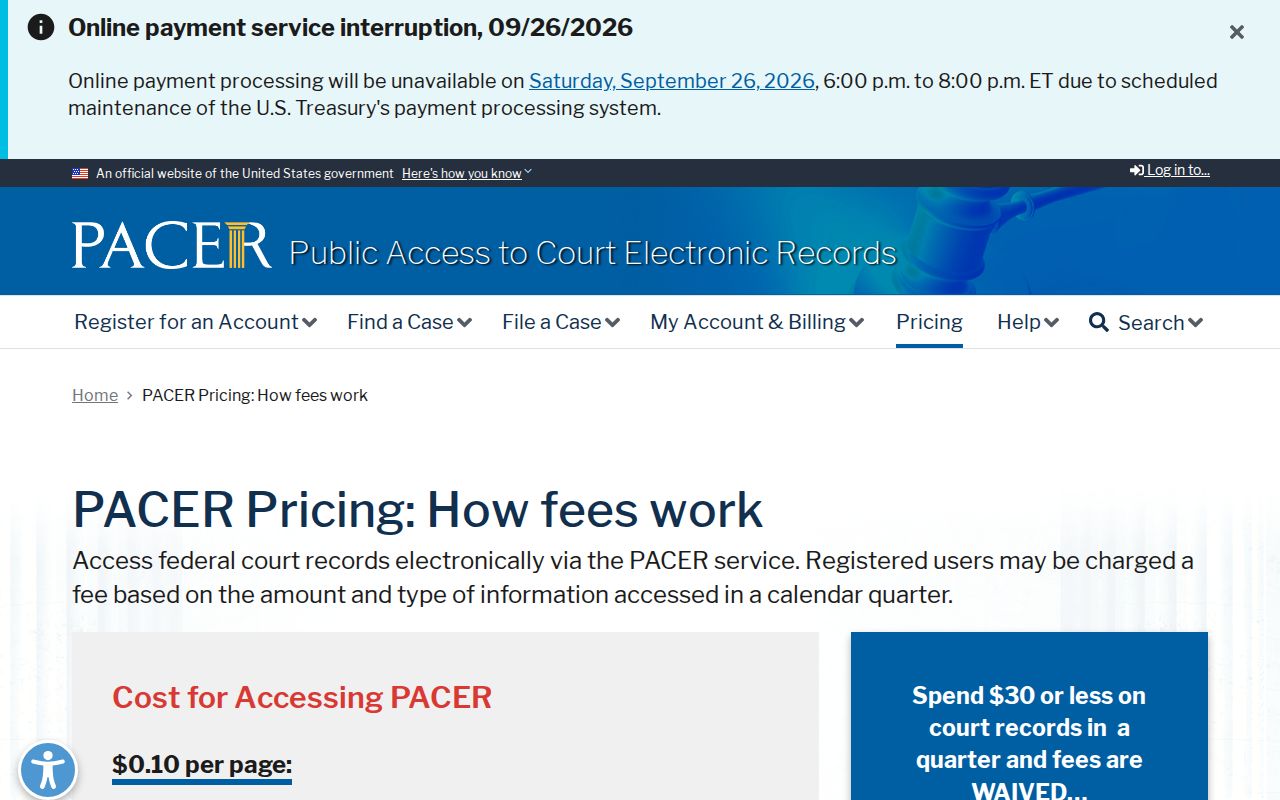
This federal route can surface public case documents. It will not confirm a state or county warrant in Michigan.
Before a Michigan Warrant Appearance
If the issuing court confirms an active warrant, start asking questions. What type of order is it? Is interim bail set? Where do you report? Does a voluntary appearance procedure apply? MCR 6.105 offers a court-first option in Michigan for some bench and arrest warrant cases when a defendant presents to the issuing court within one year. If a judicial officer is available, the rule calls for arraignment within two hours; otherwise it provides for recall and a future date. Exceptions apply, and the rule promises neither release nor dismissal.
- Confirm the case and current warrant status with the issuing clerk.
- Ask about bond, appearance location, identification, and whether counsel should arrange the visit.
- Address the underlying case separately from the warrant. A payment or court appearance may not close every obligation.
- After a recall, confirm the docket entry and any LEIN or serving-agency update.
Michigan has no statewide surrender counter. No standard walk-in schedule or bond amount applies statewide. Instead, the issuing court and local agency set those details, and the county directory below routes to the court and sheriff for the location on the case.
Warrant Records by County in Michigan
Warrants live at the county level, so the quickest route runs through the county named on the ticket or case record. Michigan's six largest county hubs are featured here for fast routing. Each entry links to that county's own site. None of them guarantees a sheriff posts a full online warrant list, though. For the actual record, the issuing court and the sheriff still give the answer.
Wayne County
Detroit · Largest county; identify the court first, including one of its municipal courts when applicable.
Oakland County
Pontiac · Multiple district courts; local sheriff and court records serve different roles.
Macomb County
Mount Clemens · Use the district court named on the citation or case.
Kent County
Grand Rapids · Local court programs are date-bound and depend on the case.
Genesee County
Flint · Begin with the issuing district or circuit court.
Washtenaw County
Ann Arbor · A docket or payment portal does not certify current warrant status.
For any other county, open the directory of all 83 Michigan counties and follow its court and sheriff route.