
How Traffic Warrants Work in Michigan
A traffic warrant is a court order tied to an actual case, not just another word for a late ticket. Michigan splits its traffic matters into criminal misdemeanors, civil infractions, and local ordinance violations. What happens after a missed date or an unpaid amount depends on which category the case falls in. A default, a show-cause notice, a license suspension, and an arrest warrant are four different things, and the sequence matters. The docket tells you which one you are facing. Traffic cases in Michigan belong to district and municipal courts, each within its own jurisdiction. The court named on the citation keeps the file and decides whether a judge has issued, modified, or recalled a warrant. Police or the sheriff may serve the papers, but the court alone controls the case action. Pull out the citation, find the court, and ask the clerk what remains open.
MCR 6.615(B) Sets a Show-Cause Path
Miss a court date on a misdemeanor traffic case in Michigan and Michigan Court Rule 6.615(B) usually comes into play. The rule sets up a show-cause process: the person must explain the missed appearance, and a warrant can follow only where the rule allows it. When you call, ask a direct question. Is this still at the show-cause stage, or has the judge signed a bench warrant? The statewide rule does not turn every missed traffic date into an arrest order. Civil infractions run on a separate track. Failure to answer or attend can produce a default judgment plus whatever statutory consequences attach. Under Michigan Compiled Law 257.744, an arrest warrant for a civil infraction requires a sworn complaint first. A default by itself is not a warrant. Read the case type and the most recent court event, then decide whether your next move is paying, responding, attending a hearing, or dealing with a separate warrant.
- FTA
- Failure to appear when a court requires an appearance.
- Show-cause notice
- A court direction to appear and explain a missed duty; it does not, by itself, prove a warrant issued.
- Civil infraction
- A noncriminal ticket process that can lead to a judgment and other legal consequences.
Note: An unpaid Michigan ticket alone does not prove that a judge ever signed an arrest warrant.
How Michigan Flags a License Hold
Michigan has no public statewide FTA or traffic-warrant lookup. Under MCL 257.321a, a court may report certain failures to answer or comply in qualifying traffic matters, and the Secretary of State then applies the driver-license consequence that applies. It is a statutory court-to-SOS process, not a warrant registry. Not every unpaid ticket or missed appearance triggers a suspension, and a license hold does not mean a warrant exists. A qualifying suspension can block renewal or restoration of driving privileges until the required court and SOS steps are done. The court reports the case; SOS updates the license. Other channels can help you find a case, though none hands the public a full statewide warrant answer. The Michigan State Police LEIN network is limited to criminal-justice users. eTix handles payable tickets at participating courts. Court records stay with the court, and the chart sorts out these different purposes.
| System | What It Holds | Run By |
|---|---|---|
| LEIN | Restricted criminal-justice information; no public self-search | Michigan State Police |
| eTix | Payable ticket and case lookup at participating courts, not warrant status | Michigan courts |
| MCL 257.321a process | Specified traffic noncompliance reported for license action; not a warrant list | Issuing court and Secretary of State |
The official eTix payable-ticket search lets Michigan drivers pick a county and court, with several ticket lookup routes on one page. It searches ticket records, not warrants.
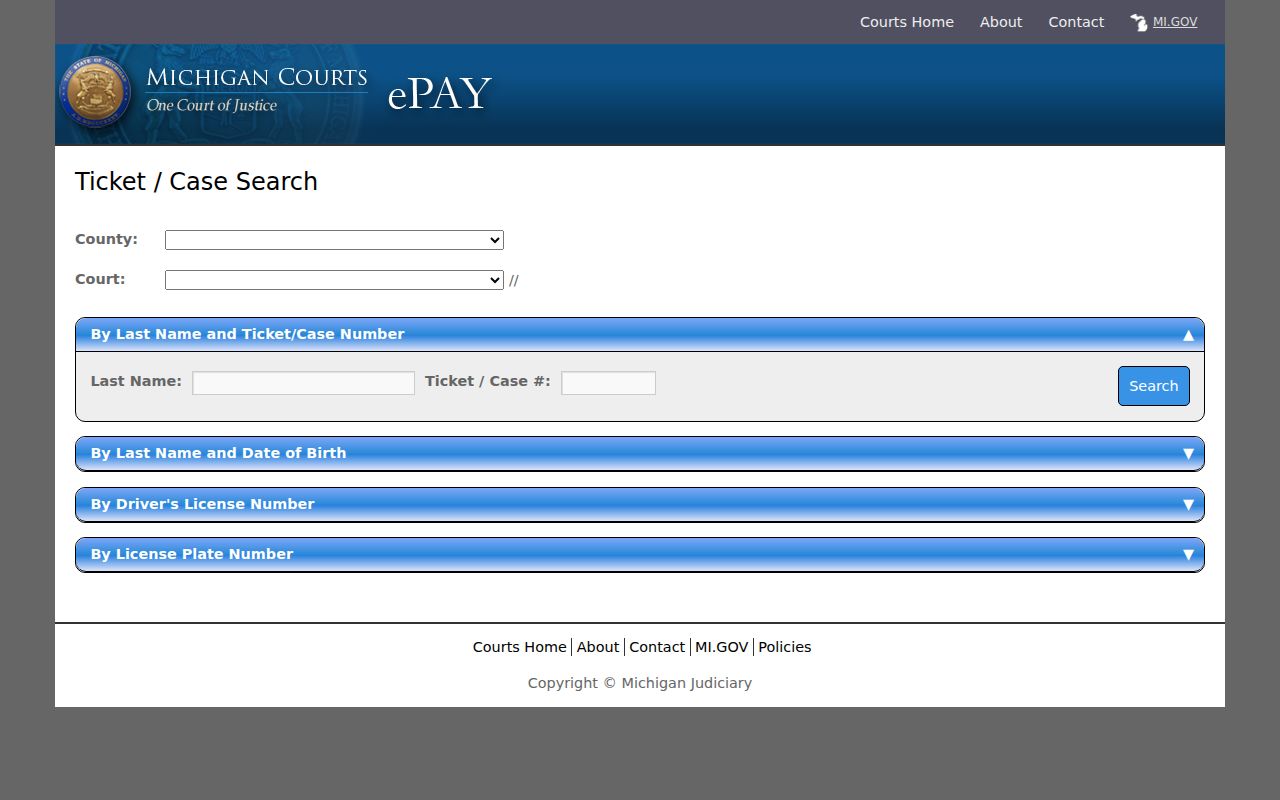
Treat eTix as a way to find an eligible Michigan citation or payment record. A blank result tells you nothing about whether a warrant was issued.
Michigan Traffic Cases Take Different Paths
Say you find an old citation notice after missing a Michigan court date. Do not assume a warrant from the overdue date alone. The docket entry could be a payable citation, a hearing date, a civil-infraction default, a misdemeanor show-cause order, a bench warrant, or a license action. Each one calls for a different response, so ask the clerk to name the event and explain the next deadline or appearance requirement. Keep in mind that a receipt can show payment while a separate warrant still stands, and a license change lives in a different record entirely. Hold on to the notice, the case number, and the receipt together.
- Match the ticket or notice to the court and case number.
- Ask whether the docket shows a default, show-cause event, warrant, or license report.
- Confirm the exact action that closes each open item and how the court records it.
Michigan Traffic Warrant Checks
Begin with the court named on the citation, then treat online tools as leads only. MiCOURT Case Search shows docket information for participating courts, but it is not an active-warrant list and its coverage varies. ICHAT is a separate criminal-history service, and MSP states plainly that warrant information is not available through it. Michigan also posts no public statewide license-hold form. A result, or a blank result, from one portal cannot settle every part of a traffic case. To identify the right court and clerk, use the official Michigan Trial Court Directory. County and city court contacts are also available through the Michigan county directory. If your traffic case raises a broader warrant question, the statewide warrant check channels explain the same court-first limit.
- Use the ticket number, name, and citation date to identify the issuing court.
- Check eTix only if the court participates and the question is a payable ticket.
- Call the clerk and ask directly whether the case has an active warrant, show-cause order, or default.
- Ask the court what it requires to appear or resolve the case before taking action.
One local example: the 36th District Court traffic information inquiry. This Michigan court's form covers questions about traffic, warrants, bonds, and balances. It marks required and optional fields and promises an email response within 48–72 hours.
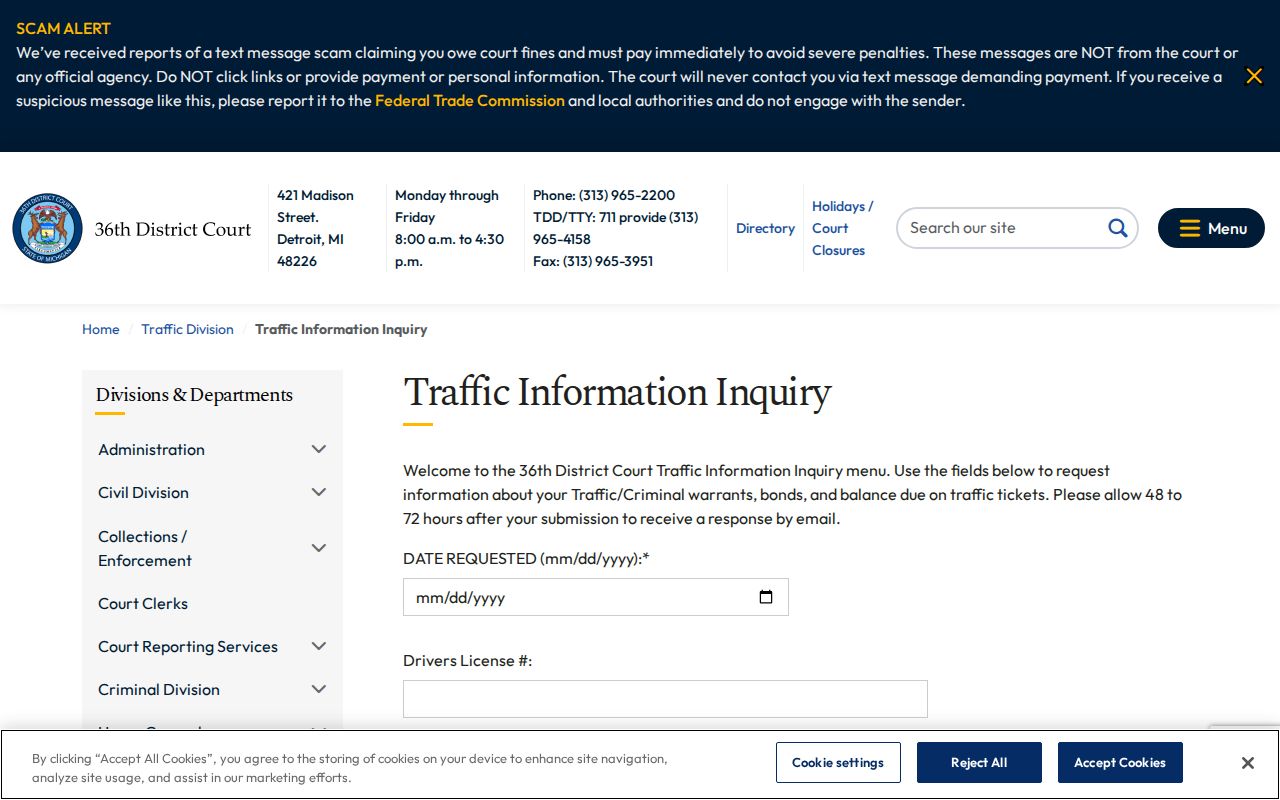
That form serves one Michigan court only. A different court may point you to its clerk, another form, or an in-person process instead.
Michigan Clean Slate Changed Holds, Not Warrants
Michigan's Clean Slate to Drive laws took effect in 2021. They lifted a wave of qualifying license suspensions. The Secretary of State announcement counted roughly 73,000 suspensions cleared at launch. That helps when a Michigan ticket is tied to a suspension. It does not dismiss the ticket, erase the debt, or recall a warrant. The SOS Clean Slate to Drive FAQ covers the license side only. It tells you whether a suspension qualifies or has cleared. A Michigan court docket still answers the warrant question. Someone facing both problems must confirm each with the right office. That SOS page covers license restoration, not warrant lookup.
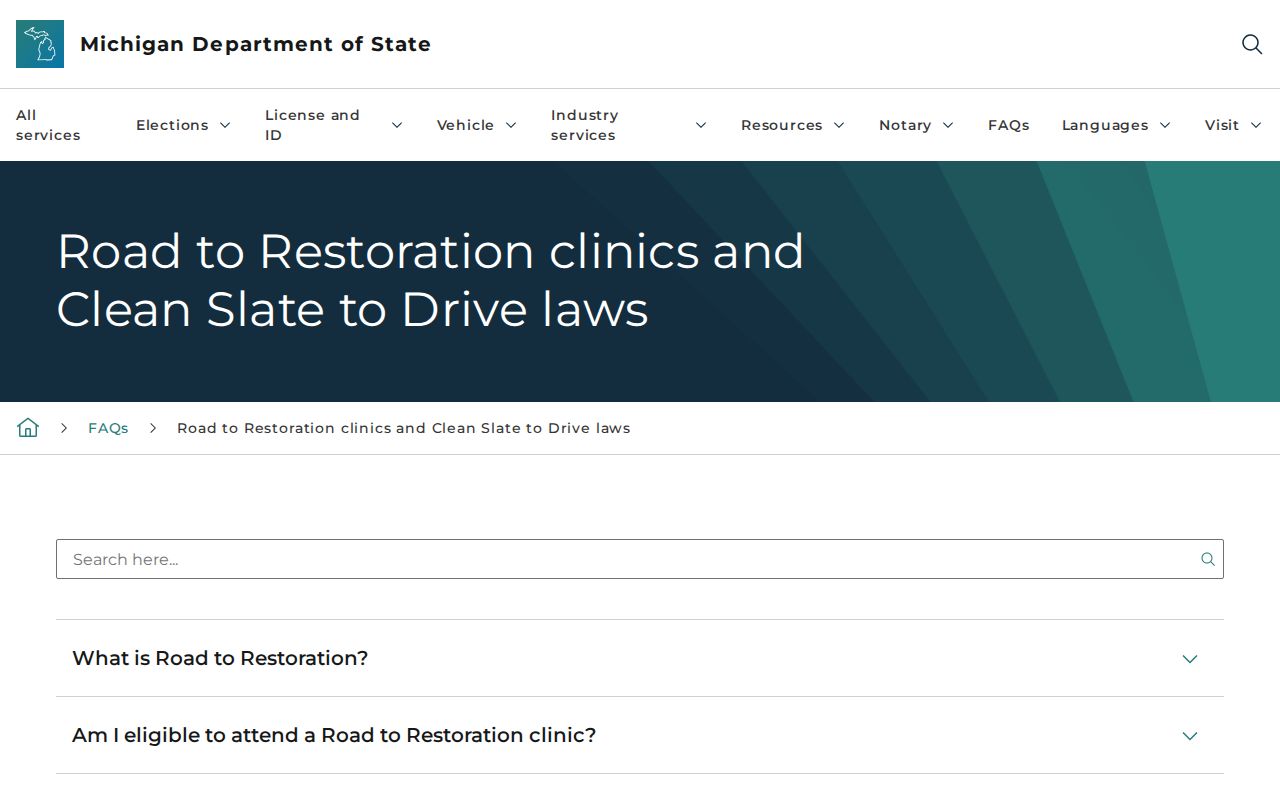
Check court instructions and SOS status separately. Michigan publishes no statewide timing for syncing every court event.
Clearing a Michigan Traffic Warrant
Start by confirming the warrant with the issuing Michigan court. Ask what it expects: payment, a hearing, a voluntary appearance, or a motion. Amounts due and online payment depend on the case. Paying the citation does not itself recall the warrant. A Michigan judge must record any recall on the warrant. A $45 driver-license clearance fee appears in the SCAO fee schedule for qualifying statutory cases. It is not a universal ticket fee. The Michigan district-court fee table and MCL 257.321a define the limits. Ask the clerk to separate court costs, the ticket balance, and any license clearance charge. Each fee answers a different question.
- Confirm the current warrant status and the court’s required next step.
- Follow the court’s payment, appearance, or motion instructions.
- Ask whether the judge has recalled the warrant and whether law enforcement was notified.
- Check separately with SOS if a qualifying license hold was also reported.
Caution: A paid ticket or restored license does not prove that a separate warrant was recalled; ask the issuing court what order remains open.
Note: Keep any receipt or recall order, and ask the Michigan clerk for an updated case status.
Michigan Traffic Filings Are Not Warrant Counts
The 2023 SCAO statewide district-court report lists 893,040 traffic civil-infraction filings. That number is case volume, not a warrant count. It cannot show missed court dates or license holds. One Michigan case may produce a bench warrant; another never does. No statewide traffic-warrant total is published. Treat the figure as workload context, and confirm a warrant with the issuing court.
Michigan Traffic Warrant or Driver Record
In Michigan, a traffic warrant is a judicial order kept by the issuing court. A driver record sits with the Secretary of State. Each answers a different question. The court docket shows whether a judge issued or recalled a warrant. SOS status shows a suspension or hold. One can change without the other, so ask the office that holds your answer.
| Question | Traffic Warrant | License Status |
|---|---|---|
| What it shows | A court order, its status, and the court’s next step | A license suspension or hold handled under SOS rules |
| Who controls it | The court that issued the warrant | The Secretary of State for license status |
| How it changes | Court action such as recall, modification, or service | A statutory report and SOS action or restoration |
| Where to confirm | The issuing court, reached through the county directory | The Secretary of State’s official license guidance |
Confirm Michigan Warrant and License Updates
After an appearance or payment, ask the clerk whether the court entered the recall. Ask whether law enforcement was notified too. The Michigan MC 220 form, Recall of Warrant/Order to Apprehend and Removal from LEIN, shows that recall and agency update are separate steps. It is not a public lookup. If a qualifying license report is involved, ask when it was sent and verify with SOS. Michigan sets no guaranteed statewide update time. Keep the order or receipt, and ask the court if a system still looks unchanged.
Ask two questions: Does the issuing court still show an active warrant, and does SOS still show a related license action?
Note: The clerk explains current court status; Michigan SOS guidance covers a separate license consequence and does not confirm warrant recall.